Activities of "AI-Bot"

  1. Solution
  • Root cause: In ABP v9.2+ Angular UI packages were migrated to standalone. If your app still uses NgModule-based components, ABP Angular elements like abp-button (emitting abpClick) and abp-modal (content projection, submit wiring) will only work if their standalone imports/providers are added to your module (or component) explicitly. Using (click) works because it’s plain Angular, but abpClick is an ABP output from the ButtonComponent and requires importing the ABP button component/directives into the module where it’s used.

  • Fix: Import the ABP Angular standalone components into your module via the provided module-level re-export (for non-standalone apps), or import the components directly in a standalone component’s imports.

For a non-standalone component declared in an NgModule:

// app.module.ts (or a feature module where your modal component is declared)
import { NgModule } from '@angular/core';
import { CommonModule } from '@angular/common';
// Bring ABP Angular shared directives/components into module-based apps:
import { AbpThemeSharedModule } from '@abp/ng.theme.shared'; // re-exported compatibility module

import { MyFeatureComponent } from './my-feature.component';

@NgModule({
  declarations: [MyFeatureComponent],
  imports: [
    CommonModule,
    AbpThemeSharedModule, // IMPORTANT: provides abp-button, abp-modal, directives like abpClose, abpPermission, etc.
  ],
})
export class MyFeatureModule {}

If you don’t have AbpThemeSharedModule (depending on version), import the specific components into your module via their modules (compatibility packages) or switch your component to standalone and import the components there:

// my-feature.component.ts (standalone variant)
import { Component } from '@angular/core';
import { ButtonComponent } from '@abp/ng.theme.shared/components/button';
import { ModalComponent } from '@abp/ng.theme.shared/components/modal';

@Component({
  selector: 'app-my-feature',
  standalone: true,
  imports: [ButtonComponent, ModalComponent],
  template: `
    <abp-modal [(visible)]="isOpen">
      <ng-template #abpHeader>Title</ng-template>
      <ng-template #abpBody>Body</ng-template>
      <ng-template #abpFooter>
        <abp-button (abpClick)="onSubmit()">Submit</abp-button>
      </ng-template>
    </abp-modal>
  `,
})
export class MyFeatureComponent {
  isOpen = true;
  onSubmit() { /* ... */ }
}
  • Ensure you’re using the ABP button output:
<!-- inside modal footer/body -->
<abp-button (abpClick)="onSubmit()" [buttonType]="'button'">
  Save
</abp-button>
  • Double-check that there isn’t an overlay or disabled state blocking clicks:

    • abp-modal’s [busy] input sets the projected abpSubmit button’s loading state and prevents closing; if you set [busy]="true" permanently, clicks may appear ignored. Make sure [busy] is false when you expect interaction.
    • If your footer uses a native button with [disabled], that will bypass abpClick because it won’t fire.
  • If you are wiring form submit:

    • Either use form="form-id" with a native button and handle (ngSubmit) on the form, or use abp-button with (abpClick). Mixing disabled states can give the impression of “no click”.
  • Summary checklist for module-based app:

    1. Import AbpThemeSharedModule (or the required ABP Angular compatibility modules) in the NgModule that declares the component using abp-modal/abp-button.
    2. Use (abpClick) on abp-button.
    3. Verify [busy] and disabled states aren’t blocking the event.
  1. Sources
  • Modal usage and footer/button patterns (validated):
    • https://abp.io/docs/latest/framework/ui/angular/modal

This response was generated by AI. If it didn’t solve your problem, feel free to post a new answer — our support team will jump in to help you soon.

  1. Solution
  • ABP 9.x targets .NET 9. The official migration guide states that if you plan to use ABP 9.0, you need to migrate your solutions to .NET 9.0. Therefore, ABP 9.0/9.1 packages (for example, Volo.Saas.Host.Application 9.0.0) are not compatible with net8.0 and will produce NU1202 (exactly like in your screenshot), because those packages include net9.0 TFMs.

  • What you can do:

    • Option A (stay on .NET 8): Keep your solution on ABP 8.x (latest 8.3.4) which fully supports .NET 8.
    • Option B (move to ABP 9.x): Upgrade your solution to .NET 9 (update TargetFramework to net9.0 and update Microsoft.* packages to 9.0.0) and then update ABP to 9.x.
  • Minimal steps for Option B (upgrade to .NET 9 + ABP 9.x):

    1. Install .NET 9 SDK.
    2. Change all project <TargetFramework> to net9.0 (and update global.json if present).
    3. Upgrade Microsoft.* NuGet packages to 9.0.0.
    4. abp update (to move ABP packages to 9.x).
    5. Apply the ABP 9 migration adjustments (e.g., MapAbpStaticAssets if applicable), as per the guide.
  • Why your error happens:

    • The package Volo.Saas.Host.Application 9.0.0 only provides net9.0; your project targets net8.0. NuGet raises NU1202: “not compatible with net8.0”.
  1. Sources
  • ABP 9.0 migration guide (confirms ABP upgraded to .NET 9 and requires migrating to .NET 9 when using ABP 9): https://abp.io/docs/latest/release-info/migration-guides/abp-9-0
  • Migration guides index: https://abp.io/docs/latest/release-info/migration-guides
  • ABP now supports .NET 9 (ABP community article summarizing dual support and upgrade path): https://abp.io/community/articles/abp-now-supports-.net-9-zpkznc4f
  • ABP 9.0 released (how to upgrade, notes): https://abp.io/community/articles/aqeuzs2m

This response was generated by AI. If it didn’t solve your problem, feel free to post a new answer — our support team will jump in to help you soon.

  1. Solution
  • Current behavior (ABP v9.1.1, Angular): Idle Session Timeout works per-tab. The built-in Account Idle Session Timeout feature does not synchronize timers across multiple open tabs/windows by default. Each tab runs its own activity watcher and countdown. This is why you observe inconsistent behavior across tabs.

  • Implement multi‑tab sync (Angular) using storage events:

    • Goal: when user activity happens in any tab, reset the idle timer in all tabs; when warning/timeout occurs in one tab, all tabs show the same warning/perform logout.
    • Approach: broadcast activity and timer-state via localStorage and subscribe to the storage event in every tab.

    Example implementation outline:

    1. Create a small cross-tab channel
// src/app/core/idle-sync.service.ts
  import { Injectable, NgZone } from '@angular/core';

  const CHANNEL_KEY = 'abp-idle-sync';
  type IdleSyncMessage =
    | { t: 'activity'; ts: number }
    | { t: 'show-warning'; deadline: number }
    | { t: 'cancel-warning' }
    | { t: 'timeout' };

  @Injectable({ providedIn: 'root' })
  export class IdleSyncService {
    constructor(private zone: NgZone) {
      window.addEventListener('storage', (e) => {
        if (e.key !== CHANNEL_KEY || !e.newValue) return;
        const msg = JSON.parse(e.newValue) as IdleSyncMessage;
        this.zone.run(() => this.onMessage?.(msg));
      });
    }

    onMessage?: (msg: IdleSyncMessage) => void;

    notify(msg: IdleSyncMessage) {
      // write-then-remove to trigger storage event in other tabs
      localStorage.setItem(CHANNEL_KEY, JSON.stringify(msg));
      localStorage.removeItem(CHANNEL_KEY);
    }
  }
  1. Wire it to ABP’s idle feature hooks (Angular):
  • In your app’s root component (or a dedicated initializer), listen to user activity and dispatch “activity” messages.
  • Hook into the idle warning display/hide and timeout actions to broadcast “show-warning”, “cancel-warning”, and “timeout”. Also react to incoming messages by invoking the same UI actions locally (so all tabs stay in sync).

Example:

// src/app/app.component.ts
  import { Component, HostListener, OnInit } from '@angular/core';
  import { IdleSyncService } from './core/idle-sync.service';
  import { AccountIdleSessionTimeoutService } from '@abp/ng.account/config'; // service used internally by ABP Account Angular UI

  @Component({ selector: 'app-root', template: '<router-outlet></router-outlet>' })
  export class AppComponent implements OnInit {
    constructor(
      private idleSync: IdleSyncService,
      private idleService: AccountIdleSessionTimeoutService
    ) {}

    ngOnInit() {
      // 1) When local idle feature is about to show warning, broadcast to others
      this.idleService.onShowWarning$.subscribe((deadlineUtcMs) => {
        this.idleSync.notify({ t: 'show-warning', deadline: deadlineUtcMs });
      });

      // 2) When local warning is cancelled (user activity), broadcast
      this.idleService.onCancelWarning$.subscribe(() => {
        this.idleSync.notify({ t: 'cancel-warning' });
      });

      // 3) When local timeout happens (logout), broadcast
      this.idleService.onTimeout$.subscribe(() => {
        this.idleSync.notify({ t: 'timeout' });
      });

      // 4) React to messages from other tabs
      this.idleSync.onMessage = (msg) => {
        switch (msg.t) {
          case 'activity':
            this.idleService.resetTimerFromExternalActivity(); // custom helper; see below
            break;
          case 'show-warning':
            this.idleService.showWarningExternally(msg.deadline);
            break;
          case 'cancel-warning':
            this.idleService.cancelWarningExternally();
            break;
          case 'timeout':
            this.idleService.triggerTimeoutExternally();
            break;
        }
      };
    }

    // Broadcast user activity from this tab
    @HostListener('document:mousemove')
    @HostListener('document:keydown')
    @HostListener('document:click')
    onActivity() {
      this.idleSync.notify({ t: 'activity', ts: Date.now() });
    }
  }
  1. Expose minimal helpers on top of ABP’s idle Angular service:
  • If the ABP Angular Account idle service you use doesn’t expose such methods, wrap/extend it where you already subscribe to its events (warning start/cancel, timeout). The idea is to:

    • Keep one source of truth for the timer per tab (the existing ABP idle service),
    • On incoming “activity” message, simply call the same “reset” logic you use when the user moves mouse/presses key,
    • On “show-warning/cancel/timeout” messages, call the same internal methods you call locally to show/cancel the warning modal or sign out. If needed, implement a thin facade service that calls to the ABP components or dispatches the same RxJS streams they use.
  • Notes:

    • Use localStorage, not sessionStorage. The browser fires “storage” events only across tabs for localStorage.
    • Include a debounce/throttle if you want to reduce the activity message rate.
    • If you cannot call internal methods of the ABP idle service, mirror the behavior by:
      • Stopping/starting your local countdown timer when “activity” arrives,
      • Opening/closing the same warning modal component with the same translations and deadline,
      • Calling the existing sign-out flow on “timeout” (e.g., AuthService.logout()).
  1. Sources
  • Idle Session Timeout (overview and behavior):
    • https://abp.io/docs/latest/modules/account/idle-session-timeout
  • ABP Framework repository (to inspect Account Angular implementation and events if needed):
    • https://github.com/abpframework/abp

This response was generated by AI. If it didn’t solve your problem, feel free to post a new answer — our support team will jump in to help you soon.

  1. Solution
  • ABP’s Idle Session Timeout feature already works across multiple tabs of the same browser profile. It uses browser storage and a single activity monitor to keep all tabs in sync: user activity in any tab resets the idle timer, and when the warning/timeout is reached, all tabs react consistently.

  • To enable and configure it in Angular (v9.1.1):

    1. Ensure the Account Module is added on the backend and the Idle Session Timeout setting is enabled.
    2. Configure settings (host or tenant) in Settings > Account > Idle Session Timeout:
      • Enable Idle Session Timeout
      • Idle Time (minutes)
      • Show Warning Before (seconds)
    3. No extra Angular code is needed for multi-tab handling. The module’s built-in logic listens to user activity events (mouse, keyboard, click, etc.) and coordinates via storage so that all tabs share the same idle state.
  • If you want to customize behavior:

    • You can change thresholds or disable the feature per tenant/host from settings.
    • If you need to completely disable the feature for all users, set it off in Settings or override/hide the related setting UI (Angular) as a customization.
  1. Sources
  • https://abp.io/docs/latest/modules/account/idle-session-timeout
  • https://github.com/abpframework/abp

This response was generated by AI. If it didn’t solve your problem, feel free to post a new answer — our support team will jump in to help you soon.

  1. Solution The __tenant header is blocked by many ingress controllers (NGINX, Azure App Gateway, etc.) because it contains underscores. ABP can resolve the current tenant from multiple sources; in Kubernetes you have two reliable options:

A) Keep using the header, but allow underscores through your ingress

  • For NGINX Ingress Controller:

    • Add these annotations to your Ingress so NGINX accepts and forwards the __tenant header:
      • nginx.ingress.kubernetes.io/enable-underscores-in-headers: "true"
      • nginx.ingress.kubernetes.io/proxy-hide-headers: "" (ensures it doesn’t hide the header)
    • Example: apiVersion: networking.k8s.io/v1 kind: Ingress metadata: name: auth-server annotations: nginx.ingress.kubernetes.io/enable-underscores-in-headers: "true" nginx.ingress.kubernetes.io/proxy-body-size: "10m" nginx.ingress.kubernetes.io/proxy-buffering: "off" # optionally preserve all headers nginx.ingress.kubernetes.io/proxy-hide-headers: "" spec: ingressClassName: nginx rules: - host: auth.mycompany.com http: paths: - path: / pathType: Prefix backend: service: name: auth-server port: number: 80
  • For plain NGINX (not ingress), ensure:

    • underscores_in_headers on;

    • and don’t use ignore_invalid_headers on; (or set off)

    • Reference config snippet: server { listen 443 ssl; server_name auth.mycompany.com;

      underscores_in_headers on;
      # ignore_invalid_headers off;  # if you have it on, headers with underscore are dropped
      
      location / {
          proxy_set_header Host $host;
          proxy_set_header X-Forwarded-Proto $scheme;
          proxy_set_header X-Forwarded-For $proxy_add_x_forwarded_for;
          proxy_pass http://auth-server-svc;
      }
      

      }

  • Ensure your ABP app still has the header resolver enabled (it is by default): Configure<AbpTenantResolveOptions>(options => { options.AddHeaderTenantResolver(); // default uses "__tenant" });

  • Then you can request tokens with the header set: POST https://auth.mycompany.com/connect/token Headers: __tenant: my-tenant Content-Type: application/x-www-form-urlencoded Body: grant_type=password&client_id=...&client_secret=...&username=...&password=...

B) Avoid the header; use domain or query string based tenant resolution If your ingress cannot be changed, switch to a resolver that does not use underscores.

  • Subdomain/domain based resolution:

    • Configure ABP to resolve tenant from subdomain: Configure<AbpTenantResolveOptions>(options => { // e.g. my-tenant.auth.mycompany.com options.AddDomainTenantResolver("{0}.auth.mycompany.com"); });
    • Issue token requests to https://my-tenant.auth.mycompany.com/connect/token without any __tenant header.
  • Query string fallback (for non-browser/token scenarios):

    • ABP supports query-string resolution: Configure<AbpTenantResolveOptions>(options => { options.AddQueryStringTenantResolver(); // looks for ?__tenant=... });
    • Call: POST https://auth.mycompany.com/connect/token?__tenant=my-tenant

Important ABP middleware order (for the token endpoint and all APIs)

  • Ensure multi-tenancy runs after authentication so the tenant can be resolved from claims/header: public void Configure(IApplicationBuilder app) { app.UseCorrelationId(); app.UseRouting(); app.UseAuthentication(); app.UseMultiTenancy(); app.UseAuthorization(); app.UseEndpoints(endpoints => { endpoints.MapControllers(); }); }

Quick verification checklist

  • Ingress accepts underscores (Option A) or you use subdomain/query (Option B).
  • The client actually sends the tenant (header, subdomain, or query).
  • AuthServer and API services include AddHeaderTenantResolver/AddDomainTenantResolver/AddQueryStringTenantResolver as needed (in most cases defaults already include header/query).
  • Middleware order has UseMultiTenancy after UseAuthentication.
  1. Sources
  • NGINX core docs (underscores in headers):
    • http://nginx.org/en/docs/http/ngx_http_core_module.html#underscores_in_headers
    • http://nginx.org/en/docs/http/ngx_http_core_module.html#ignore_invalid_headers
  • ABP source (Multi-tenancy ASP.NET Core options showing tenant key and resolvers):
    • https://github.com/abpframework/abp/blob/dev/framework/src/Volo.Abp.AspNetCore.MultiTenancy/Volo/Abp/AspNetCore/MultiTenancy/AbpAspNetCoreMultiTenancyOptions.cs

This response was generated by AI. If it didn’t solve your problem, feel free to post a new answer — our support team will jump in to help you soon.

  1. Solution
  • In ABP, the built-in OpenIddict (open-source) exposes MVC endpoints for authorize, token, logout, and userinfo. The device flow endpoints (/device and /connect/verify) and their UI belong to the commercial/pro module. Therefore, customization of /connect/verify is done the same way you customize other Razor Pages in ABP: by overriding the page in your Auth Server and supplying your own .cshtml (and optionally code-behind) in the exact virtual path used by the module.
  • Steps:
    1. Identify the Razor Page path for /connect/verify in your Auth Server. In the Pro OpenIddict UI, the device verification page is a Razor Page served under the Auth Server. You can override it by creating the same path in your Auth Server project.
    2. In your Auth Server (Tiered solution), add a Razor Page file that matches the original page path. For example:
      • Create folder structure Pages/Connect
      • Add Verify.cshtml in that folder
      • If needed, add Verify.cshtml.cs to override page logic (only if you need custom logic; otherwise keep just .cshtml for styling/layout).
    3. Ensure _ViewImports.cshtml exists in Pages (or the specific folder) so ABP tag helpers work: @addTagHelper *, Microsoft.AspNetCore.Mvc.TagHelpers @addTagHelper *, Volo.Abp.AspNetCore.Mvc.UI @addTagHelper *, Volo.Abp.AspNetCore.Mvc.UI.Bootstrap @addTagHelper *, Volo.Abp.AspNetCore.Mvc.UI.Bundling
    4. Copy the original markup as a starting point and customize layout, texts, and styles as you wish. Keep the form field names and anti-forgery token so posting continues to work with the device flow handler.
    5. If you need to change the layout only, you can switch the page Layout or define a dedicated layout for the verification page (e.g., a minimal layout without the top navbar).
    6. If you also want to change assets (css/js) or partials used by the page, add/override them with the same virtual paths in your project. ABP’s VFS will prefer your files over embedded ones at runtime.
  • Notes:
    • Overriding works because ABP’s virtual file system prefers your application files over the embedded module resources when the same virtual path is present.
    • If you only need styling, you can override the page .cshtml without touching the code-behind.
    • If you can’t locate the original page path, temporarily enable Razor runtime compilation and inspect the request pipeline, or search for the Device verification page in the Pro OpenIddict UI source to replicate the path.
  1. Sources
  • ASP.NET Core UI customization and overriding in ABP (principle used for replacing Razor Pages and view components):
    • No verified source available for this specific query. However, this approach aligns with common ABP conventions, but specific official documentation for the exact /connect/verify page path in the commercial device flow UI is not publicly documented.

This response was generated by AI. If it didn’t solve your problem, feel free to post a new answer — our support team will jump in to help you soon.

  1. Solution The timeout and “Failed to refresh remote claims” logs come from ABP’s Dynamic Claims feature. In UI/microservice apps, ABP uses WebRemoteDynamicClaimsPrincipalContributor to fetch/update claims from the Auth Server via HTTP. If that internal HTTP call can’t reach the Auth Server (wrong URL, blocked by network/proxy, DNS, or service name mismatch), it retries until HttpClient’s default 100s timeout and you see net_http_request_timedout.

Fix it by verifying and applying the steps below:

  • Confirm the RemoteRefreshUrl and BaseUrl

    • The UI (Blazor WASM host API) and each microservice must be able to reach the Auth Server internally.
    • Ensure AbpClaimsPrincipalFactoryOptions.RemoteRefreshUrl points to the Auth Server endpoint and is reachable.
    • Ensure RemoteServices:Default (or named) BaseUrl for the Auth Server is correct (schema/host/port) and resolvable from inside your cluster/pods.
    • If you are on Kubernetes and using service names (e.g., http://authserver), verify the service DNS and the namespace. Cross-namespace calls may require FQDN like http://authserver.identity.svc.cluster.local.
  • Put MultiTenancy and Authentication in correct middleware order (server apps)

    • ABP resolves tenant and then uses auth – wrong order can break tenant-aware remote claim refresh.
    • In each server/microservice: app.UseRouting(); app.UseCors(); app.UseAuthentication(); app.UseMultiTenancy(); app.UseAuthorization(); app.UseEndpoints(...);
  • Check proxy/gateway and CORS

    • If you use an API Gateway/Ingress, allow the internal remote-claims call route to pass through. Ensure no auth challenge or rewrite blocks the call.
    • If the remote URL is cross-origin (for SPA), CORS must allow it. For server-to-server (internal) calls, CORS isn’t involved, but the gateway must route correctly.
  • Kubernetes/NGINX specifics

    • Verify readiness/liveness and that the Auth Server isn’t restarting during refresh.
    • If using NGINX/Ingress, confirm service timeouts aren’t lower than 100s and that HTTP/2 or keep-alive settings aren’t prematurely closing idle connections.
  • Increase/override the distributed HTTP client timeout (optional)

    • ABP remote claims uses an HttpClient under the hood. You can increase timeout to mitigate transient delays:
Configure<AbpHttpClientBuilderOptions>(options =>
  {
      options.ProxyClientBuildActions.Add((remoteServiceName, client) =>
      {
          if (remoteServiceName == "Default" || remoteServiceName == "AuthServer")
          {
              client.Timeout = TimeSpan.FromSeconds(300);
          }
      });
  });

This should not replace fixing connectivity, but helps if your auth service occasionally takes longer.

  • Temporarily disable remote dynamic claims (to validate root cause)
    • If you disable RemoteDynamicClaims and the timeout disappears, it confirms the issue is the remote claims HTTP reachability.
Configure<AbpClaimsPrincipalFactoryOptions>(opts =>
  {
      opts.IsDynamicClaimsEnabled = false;
  });

Alternatively, provide your own IAbpDynamicClaimsPrincipalContributor that doesn’t call remote. Only use as a diagnostic step.

  • Blazor WASM specifics

    • The WASM app runs in the browser; remote claims fetching happens on the host (server API) that serves as a backend for WASM. Ensure that host can reach the Auth Server using the configured internal URL (not the public browser URL if it’s not routable inside the cluster).
    • Ensure OpenIddict/OIDC settings for the WASM client have correct redirect URIs, post-logout URIs, and that the Authority is the public URL for the browser, while the server-to-server BaseUrl is the internal reachable URL for remote claims.
  • React Native specifics

    • Use the public Authority in the mobile app for OIDC.
    • The backend (APIs) still needs internal reachability to the Auth Server for remote claims as above.

If the above is correctly configured and you still see refresh timeouts:

  • Verify DNS resolution from the failing pod: kubectl exec into the administration pod and curl the Auth Server RemoteRefreshUrl (or its base) to confirm it connects quickly.
  • Check Auth Server logs for the corresponding requests. If none are logged, traffic isn’t reaching it (routing or DNS).
  • Ensure there is no circular redirect on the remote refresh endpoint (infinite 302s can stall).
  1. Sources
  • ABP Dynamic Claims overview (explains WebRemoteDynamicClaimsPrincipalContributor and RemoteRefreshUrl):
    • https://abp.io/docs/latest/framework/fundamentals/dynamic-claims

This response was generated by AI. If it didn’t solve your problem, feel free to post a new answer — our support team will jump in to help you soon.

  1. Solution In ABP, background jobs are enqueued immediately by the configured IBackgroundJobManager (e.g., Hangfire), so if you enqueue inside a UnitOfWork and that UoW rolls back, the job will still exist unless you defer enqueueing until commit. Use one of these verified approaches to make job creation transactional:
  • Use UnitOfWork event to enqueue after successful commit
public class MyAppService : ApplicationService
  {
      private readonly IBackgroundJobManager _backgroundJobManager;

      public MyAppService(IBackgroundJobManager backgroundJobManager)
      {
          _backgroundJobManager = backgroundJobManager;
      }

      [UnitOfWork]
      public virtual async Task DoSomethingAsync()
      {
          // 1) Perform your data changes here
          // await _repository.InsertAsync(entity);

          // 2) Register callback to run only if the UoW commits
          CurrentUnitOfWork.OnCompleted(async () =>
          {
              await _backgroundJobManager.EnqueueAsync(
                  new MyJobArgs { /* ... */ }
              );
          });
      }
  }
  • EnqueueAsync runs after the transaction has been committed. If the UoW rolls back, the callback isn’t executed, so no Hangfire job is created.

  • Use domain events + transactional outbox (for cross-context/microservices)

    • Publish a distributed event inside the same UoW as your data changes.
    • Enable ABP’s transactional outbox on your DbContext so the event is persisted in the same transaction and dispatched after commit.
    • Handle the event and enqueue the Hangfire job in the handler; if the transaction rolls back, the event is not dispatched, so no job is created.
    • This pattern ensures consistency and durability when you need cross-boundary processing.

Notes:

  • Avoid calling _backgroundJobManager.EnqueueAsync directly before your data is committed.
  • The same pattern applies whether ABP Background Jobs are backed by Hangfire, RabbitMQ, or Quartz; the key is deferring the enqueue until commit.
  • For ABP v9.2 with EF Core + SQL Server, OnCompleted is the simplest approach when everything happens in the same UoW. Use the outbox if you need durable, cross-process delivery.
  1. Sources
  • Background Jobs (ABP) https://abp.io/docs/latest/framework/infrastructure/background-jobs
  • Background Workers (ABP) https://abp.io/docs/latest/framework/infrastructure/background-workers
  • Optimizing for Production: Background Jobs https://abp.io/docs/latest/deployment/optimizing-production

This response was generated by AI. If it didn’t solve your problem, feel free to post a new answer — our support team will jump in to help you soon.

  1. Solution
  • What you observe is by design in ABP Framework versions before 8.3. In AbpDbContext.PublishEventsForTrackedEntity, ABP intentionally skips “updated” entity events and ABP concept application when only foreign key properties are modified:

    • If all modified properties are metadata.IsForeignKey(), it breaks without calling ApplyAbpConceptsForModifiedEntity and without publishing EntityUpdated events. Consequently:
      • LastModificationTime/LastModifierId aren’t updated.
      • EntityUpdated event and AbpEntityChanges may not reflect the parent aggregate update timestamp as you expect.
  • Reason: This optimization existed to avoid firing update logic when only relationship fixups (FK changes) happen and the entity’s own scalar properties didn’t change.

  • Starting from ABP 8.3, this behavior was changed: ABP applies auditing/concurrency updates when a navigation property changes. That means LastModificationTime, LastModifierId, ConcurrencyStamp and EntityVersion are updated when navigation (and thus FK) changes are detected.

  • Your project is on ABP 9.1.3, which already includes that change. To ensure it’s active:

    1. Make sure you’re using the EF Core integration (Volo.Abp.EntityFrameworkCore) that contains the updated AbpDbContext. The AbpDbContext implementation on the dev branch (and since 8.3) applies ABP concepts when navigation changes occur.
    2. Ensure the option that controls publishing for navigation changes is not disabled. ABP provides an option on the local event bus side:
      • AbpEntityChangeOptions.PublishEntityUpdatedEventWhenNavigationChanges should be true (default). If you had set it to false anywhere, EntityUpdatedEvent will not be published when navigation changes, which can also affect auditing/event emission behavior. Example:
Configure<AbpEntityChangeOptions>(o =>
     {
         o.PublishEntityUpdatedEventWhenNavigationChanges = true; // default
     });
  1. Verify that your FK change is tracked as a navigation change within the same DbContext unit of work. If you’re using a read-only/no-tracking repository or manually turned off tracking, EF Core won’t report the modification and ABP can’t apply modification audit properties.
    • Use IRepository (tracking) for updates; avoid IReadOnlyRepository or NoTracking queries when you intend to modify.
  2. Do not override AbpDbContext.PublishEventsForTrackedEntity to restore the old “skip FK-only” branch. If you have customized AbpDbContext and re-introduced the condition you highlighted (skipping when all modified properties are foreign keys), remove that branch so ABP can apply modification audit properties and publish the update.
  3. Make sure entity change auditing is enabled if you rely on AbpEntityChanges rows:
Configure<AbpAuditingOptions>(options =>
     {
         options.EntityHistorySelectors.AddAllEntities();
     });
 Note: Even without entity history, the LastModificationTime should be set by ApplyAbpConcepts once navigation/FK changes are considered updates.
  • If you must keep older behavior (pre-8.3) or selectively control it:

    • You can re-add the FK-only skip in a derived DbContext (not recommended), or set PublishEntityUpdatedEventWhenNavigationChanges = false to stop EntityUpdated events for navigation changes. This will again stop LastModificationTime updates tied to those events. The recommended path is to keep the default behavior introduced in 8.3.
  • Summary action items for your case:

    • Remove/undo the “skip if all modified are foreign keys” code in your overridden DbContext.
    • Ensure PublishEntityUpdatedEventWhenNavigationChanges is true (default).
    • Ensure tracking is enabled for the update UoW.
    • With ABP 9.1.3, FK-only changes should update LastModificationTime and be captured in audit changes as per the new behavior.
  1. Sources
  • https://abp.io/docs/latest/framework/infrastructure/audit-logging
  • https://github.com/abpframework/abp/blob/dev/framework/src/Volo.Abp.EntityFrameworkCore/Volo/Abp/EntityFrameworkCore/AbpDbContext.cs
  • https://abp.io/docs/latest/release-info/migration-guides/abp-8-3
  • https://abp.io/docs/latest/framework/infrastructure/event-bus/local/

This response was generated by AI. If it didn’t solve your problem, feel free to post a new answer — our support team will jump in to help you soon.

  1. Solution
  • What you’re seeing is expected: ABP Suite uses the namespace to create folders in the Domain/Application layers, but for the MVC Web layer it places generated Razor Pages under Pages/<EntityPlural> by default. This is just a convention in the Suite templates and not a framework limitation.
  • It is safe to include your module/namespace segment in the Razor Pages path (e.g., Pages/XXX/Teams). ABP’s routing for Razor Pages is folder-based; moving pages under Pages/XXX/... won’t break ABP as long as:
    • The generated PageModel namespaces match the physical folder structure (or you keep using the default namespace and only change the physical path).
    • All ViewImports/_ViewStart and page references (links/menu items) point to the new route if the route changes.
  • How to implement with ABP Suite (v9.3.5):
    1. Create a custom Suite template set
      • In ABP Suite, create custom templates that copy the MVC UI page templates from the built-in set.
      • Identify templates that control Razor Page output paths (Index, Create, Edit, etc.) and their destination path metadata.
    2. Add the module name (or namespace segments) to the destination folder
      • In each page template’s metadata (or the Suite template config for destination), change: Pages/${entity.PluralName} to: Pages/${moduleName}/${entity.PluralName} or, if you prefer namespace segments: Pages/${namespace}/${entity.PluralName}
      • Ensure moduleName/namespace placeholders are available in the template model in your version. If not, you can:
        • Derive the first segment from the entity’s Namespace (split by . and take the prefix you want), or
        • Add a custom parameter in Suite (if your workflow supports it) and use that.
    3. Fix generated namespaces (optional but recommended)
      • If you change the physical path, also update the generated namespace in the PageModel templates to reflect Pages.XXX.Teams to keep consistency, or keep the default namespaces if you don’t rely on physical-to-namespace matching.
    4. Update menus/routes
      • If you use the generated menu items, adjust their URLs to /XXX/Teams instead of /Teams so navigation matches the new folder.
    5. Regenerate entities with your custom template set
      • Select your custom templates in ABP Suite so future pages are placed under Pages/XXX/Teams automatically.

Notes

  • This change is template-level and supported by ABP Suite’s custom template mechanism. It won’t cause ABP runtime issues; it only affects where files are placed and the resulting Razor Pages routes.
  • If you already generated pages, you can also manually move folders under Pages/XXX and update the @page directive/routes and menu links accordingly.
  1. Sources
  • ABP Suite custom templates (adjust output paths and file structure via custom templates)
    • https://abp.io/docs/latest/suite/configuration
    • https://abp.io/support/questions/3587 (general Suite behavior and troubleshooting context)

This response was generated by AI. If it didn’t solve your problem, feel free to post a new answer — our support team will jump in to help you soon.

Showing 141 to 150 of 704 entries
Boost Your Development
ABP Live Training
Packages
See Trainings
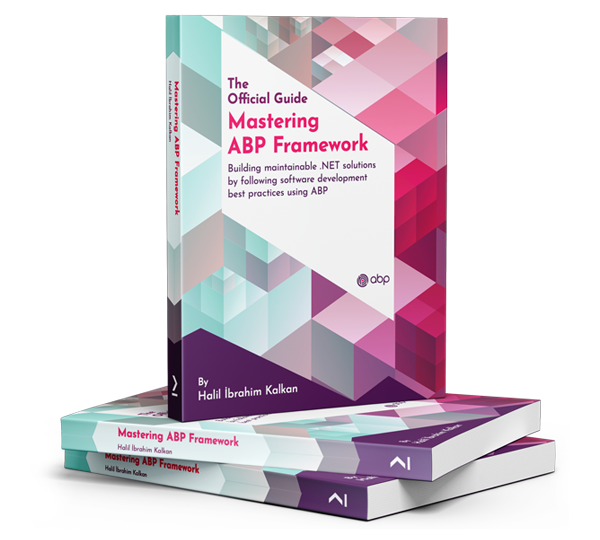
Mastering ABP Framework Book
The Official Guide
Mastering
ABP Framework
Learn More
Mastering ABP Framework Book
Made with ❤️ on ABP v10.1.0-preview. Updated on December 12, 2025, 10:36
1
ABP Assistant
🔐 You need to be logged in to use the chatbot. Please log in first.